
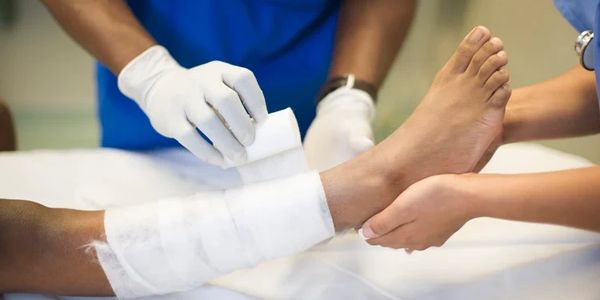
If you have wounds on your legs or feet that take a long time to heal, the problem may not be your skin—it may be your circulation. Poor blood flow caused by vascular disease, diabetes, or other conditions can prevent your body from repairing itself properly. Without treatment, these wounds may become painful, infected, or even put you at risk for serious complications.
At Valley Interventional Associates, Dr. John Lee and Dr. Navin Budhwani and their skilled nursing staffspecialize in treating slow-healing wounds by addressing the root cause: poor circulation. With advanced imaging, minimally invasive procedures, and compassionate care, we help you heal more effectively and protect your long-term health.
What Is Vascular Wound Care?
Vascular wound care focuses on treating wounds that develop because of reduced blood supply. These wounds are common in patients with peripheral arterial disease, diabetes, or chronic venous disease. Care typically involves:
- Evaluating circulation with diagnostic imaging, such as ultrasound or angiogram
- Restoring blood flow through treatments like angioplasty or stenting
- Providing specialized wound care to promote healing and prevent infection
Benefits of Vascular Wound Care
- Targets the root cause of slow healing: poor circulation
- Helps prevent infection and complications
- Promotes faster healing of chronic wounds
- Reduces the risk of amputation
- Improves comfort, mobility, and quality of life
Who Needs Wound Care?
You may benefit from vascular wound care if you:
- Have wounds or ulcers on your feet or legs that don’t heal normally
- Notice changes in skin color or texture around wounds
- Have diabetes, peripheral arterial disease, or venous disease
- Experience frequent pain, swelling, or poor circulation in your legs
The Wound Care Process
- Your circulation is evaluated with diagnostic imaging.
- If necessary, minimally invasive treatments such as angioplasty are performed to improve blood flow.
- Specialized wound care techniques are used to help your wound close and heal properly.
- You’ll receive ongoing guidance to support long-term healing and prevent future problems.
Recovery and Results
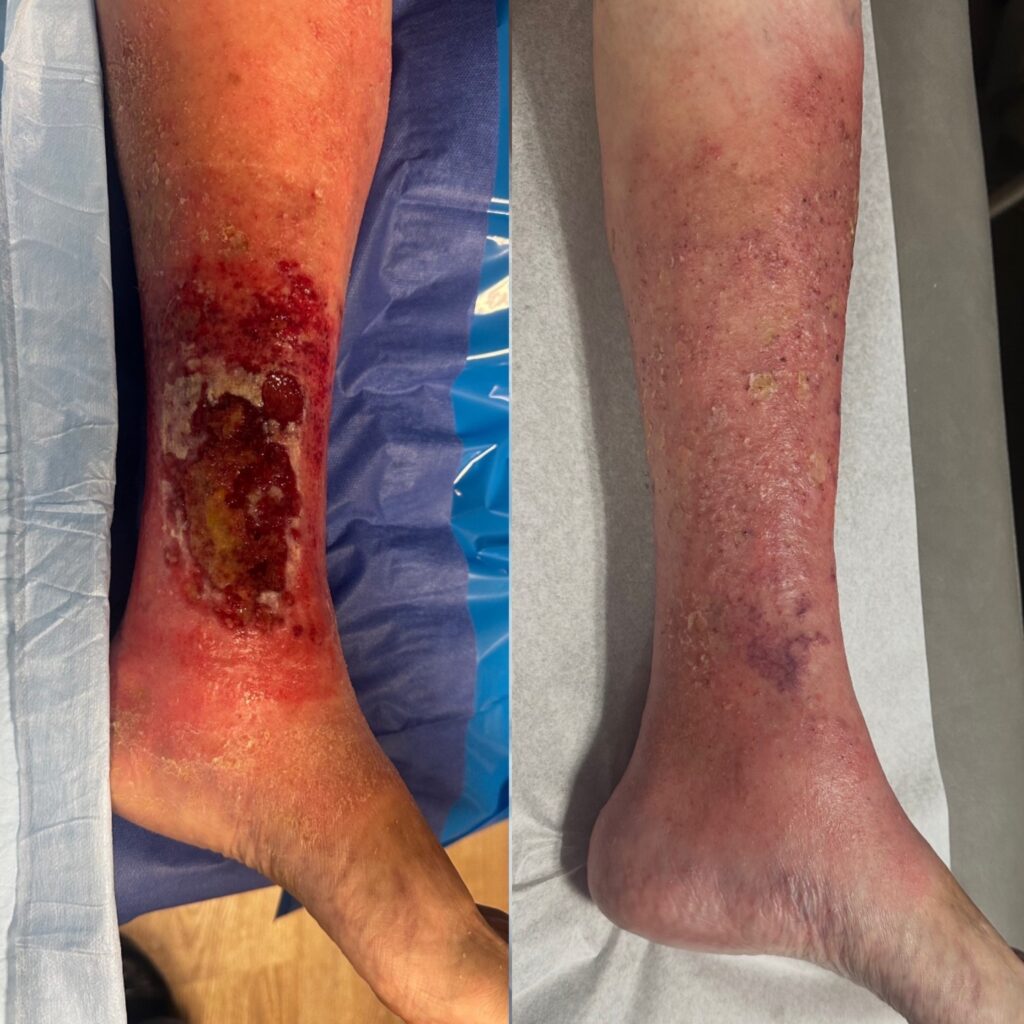
Healing depends on the size and severity of your wound, but many patients notice improvement once blood flow is restored. With the right combination of vascular treatment and wound care, you’ll have a better chance at faster healing and reducing the risk of further complications.
Actual Before and After pictures of a wound care patient at Valley Interventional Associates
Why Choose Valley Interventional Associates for Wound Care?
- Specialists in diagnosing and treating circulation-related wounds
- Advanced imaging and minimally invasive treatments to restore blood flow
- Comprehensive services in one location, including ultrasounds, angiograms, angioplasty, venograms, and wound care
- A compassionate team dedicated to helping you heal and avoid future complications
Take the Next Step Toward Healing
Chronic wounds should never be ignored. At Valley Interventional Associates, we provide expert wound care that addresses circulation problems and helps you heal more effectively. Serving Northern New Jersey, our team is here to support your recovery. To learn more, contact us today at (973) 692-0033.
FAQ
Leg wounds caused by poor circulation are treated by identifying and correcting blood flow issues while also caring for the wound itself. This may include vascular imaging to assess circulation, minimally invasive procedures to improve blood flow, and specialized wound care to support healing and reduce the risk of infection.
Non-healing leg wounds are often caused by poor circulation, peripheral arterial disease, chronic venous disease, diabetes, or ongoing swelling and pressure. When blood flow is limited, the body cannot deliver enough oxygen and nutrients to heal the wound properly.
Circulation-related leg wounds may appear as open sores or ulcers on the lower legs or feet. They are often accompanied by skin discoloration, swelling, drainage, thickened skin around the wound, or changes in skin temperature or texture.
Healing time varies based on the size of the wound, how long it has been present, and overall circulation health. Many patients begin to see improvement within weeks after blood flow is restored, though more complex wounds may require longer-term care.
Diabetic leg wounds are treated by managing the wound itself and addressing factors that slow healing, such as poor circulation and infection risk. Treatment often includes vascular evaluation, improving blood flow when needed, and specialized wound care to promote closure and protect surrounding tissue.
Diabetic leg wounds heal slowly due to a combination of reduced circulation, nerve damage, and changes in the body’s ability to repair tissue. Even small injuries can become serious if blood flow is limited, which is why early evaluation and targeted treatment are important.